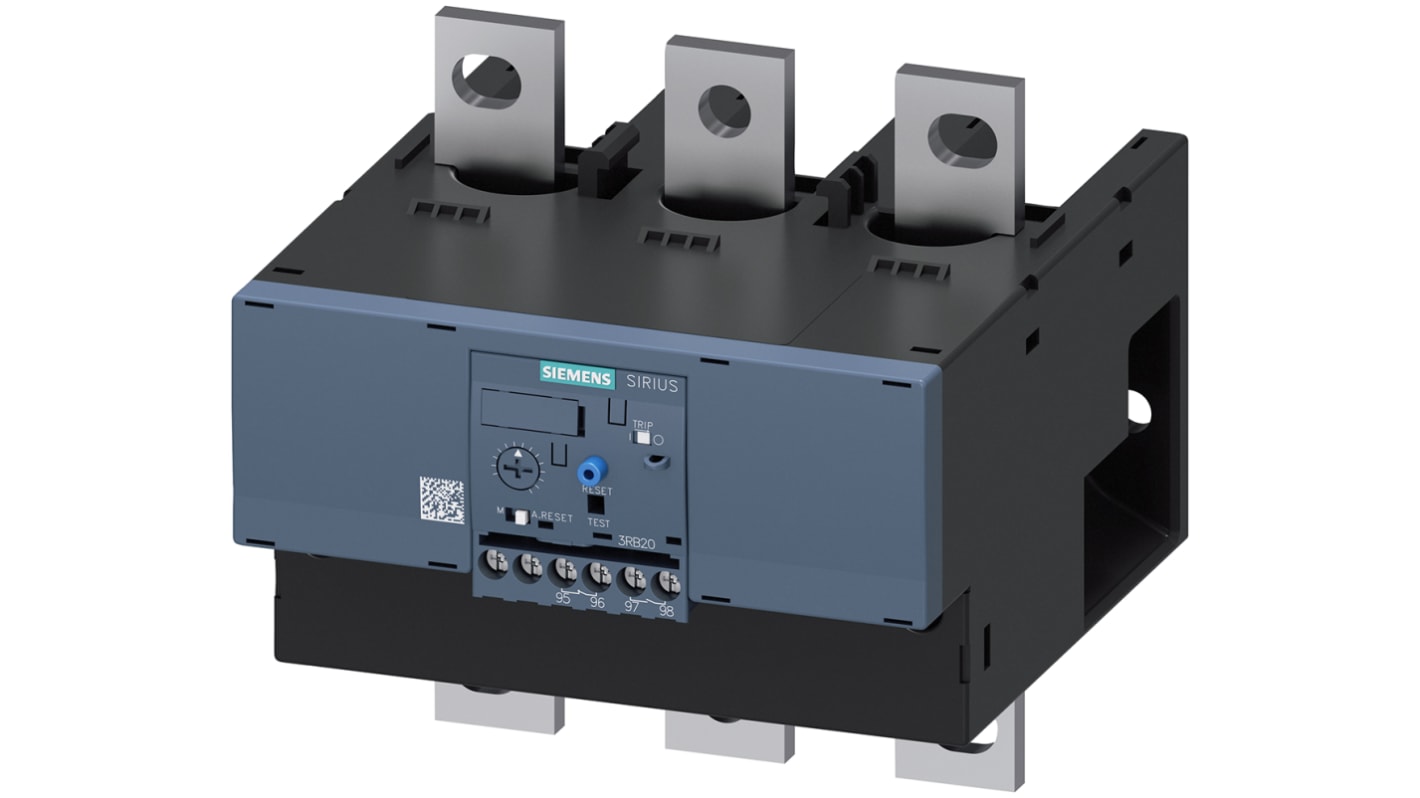
Siemens, 3RB Overload Relay 1 NO/1 NC, 630A F.L.C, 4A Contact Rating, 250 kW 3
- RS 제품 번호:
- 751-8860
- 제조사 부품 번호:
- 3RB2066-1MC2
- 제조업체:
- Siemens

Subtotal (1 unit)*
₩1,827,091.50
재고있음
- 3 개 단위 배송 준비 완료
더 자세한 내용이 필요하신가요? 필요한 수량을 입력하고 '배송일 확인'을 클릭하면 더 많은 재고 및 배송 세부정보를 확인하실 수 있습니다.
수량 | 한팩당 |
|---|---|
| 1 + | ₩1,827,091.50 |
* 참고 가격: 실제 구매가격과 다를 수 있습니다
- RS 제품 번호:
- 751-8860
- 제조사 부품 번호:
- 3RB2066-1MC2
- 제조업체:
- Siemens
사양
참조 문서
제정법과 컴플라이언스
제품 세부 사항
제품 정보를 선택해 유사 제품을 찾기
모두 선택 | 제품 정보 | 값 |
|---|---|---|
| 브랜드 | Siemens | |
| FLC Motor Rating | 630A | |
| Product Type | Overload Relay | |
| Relay Contact Current | 4A | |
| Series | 3RB | |
| Mount Type | Direct | |
| Pole and Throw Configuration | 3 | |
| Power Rating | 250kW | |
| Normal State Configuration | 1 NO/1 NC | |
| Terminal Type | Screw | |
| Reset Method | Automatic & Manual | |
| IP Rating | IP00 | |
| Minimum Operating Temperature | -25°C | |
| Number of Auxiliary Contacts | 2 | |
| Adjustable Current Range | 160 to 630 A | |
| Width | 85mm | |
| Maximum Operating Temperature | 60°C | |
| Length | 145mm | |
| Contact Voltage | 230V ac | |
| Standards/Approvals | REACH, EAC, IEC, CE, RoHS, CCC, WEEE (2012/19/EU), UKCA, UL | |
| Depth | 156mm | |
| Supply Voltage | 400V | |
| 모두 선택 | ||
|---|---|---|
브랜드 Siemens | ||
FLC Motor Rating 630A | ||
Product Type Overload Relay | ||
Relay Contact Current 4A | ||
Series 3RB | ||
Mount Type Direct | ||
Pole and Throw Configuration 3 | ||
Power Rating 250kW | ||
Normal State Configuration 1 NO/1 NC | ||
Terminal Type Screw | ||
Reset Method Automatic & Manual | ||
IP Rating IP00 | ||
Minimum Operating Temperature -25°C | ||
Number of Auxiliary Contacts 2 | ||
Adjustable Current Range 160 to 630 A | ||
Width 85mm | ||
Maximum Operating Temperature 60°C | ||
Length 145mm | ||
Contact Voltage 230V ac | ||
Standards/Approvals REACH, EAC, IEC, CE, RoHS, CCC, WEEE (2012/19/EU), UKCA, UL | ||
Depth 156mm | ||
Supply Voltage 400V | ||
- COO (Country of Origin):
- DE
Siemens SIRIUS Classic Overload Relay, 250kW, 4A - 3RB Series - 3RB2066-1MC2
Protect your industrial motors from overheating due to overload with this robust relay from Siemens' SIRIUS Classic range. It functions as part of the motor starter and works by monitoring the current flowing in the circuit. When the current rises, it'll trip above a set limit over a period of time and cut off power to the motor, protecting it from damage. This overload relay has a test function, so you can easily check that it's in good working condition. Manual and automatic reset options enable a quick restart after it's tripped. You can easily connect cables to this relay thanks to its screw terminals, which make installation quick and efficient.
• Power rating of 250kW for heavy-duty industrial use
• Broad operating temperature range of -25°C to +60°C for use in demanding environments
• Thermoplastic housing material is durable and impact resistant
• Light weight of 1.8kg for easy handling
How do I maintain this overload relay?
Maintain this relay by carrying out regular cleaning and rust removal. It's also important to check and tighten any loose screws to avoid heat accumulation from partial contacts. Frequent testing with a simulated overload current will flag up any performance issues.